
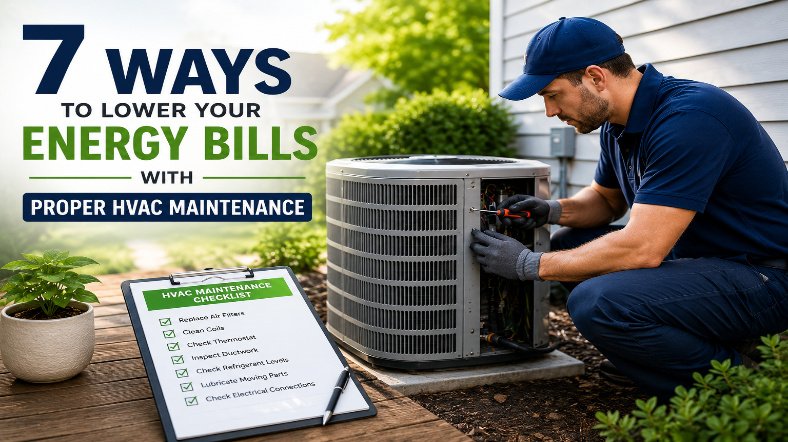
Heating and cooling account for a significant portion of your home’s energy usage. If your utility bills keep climbing, your HVAC system could be the reason. The good news is that regular HVAC maintenance can improve efficiency, reduce energy consumption, and extend the life of your system.
Whether it’s the peak of summer or the middle of winter, keeping your HVAC system in top condition helps maintain a comfortable home while saving money every month. Here are seven practical ways proper HVAC maintenance can lower your energy bills.
1. Replace Air Filters Regularly
A dirty air filter forces your HVAC system to work harder to circulate air throughout your home. This extra strain increases energy usage and can reduce indoor air quality.
For the best performance:
- Replace filters every 1–3 months.
- Check filters more often if you have pets or allergies.
- Use the filter type recommended by your manufacturer.
A clean filter helps improve airflow and allows your system to operate more efficiently.
2. Schedule Annual HVAC Tune-Ups
Routine maintenance is one of the easiest ways to keep your system running efficiently. During a professional inspection, technicians clean components, inspect electrical connections, check refrigerant levels, and identify potential problems before they become expensive repairs.
Annual servicing helps:
- Improve system efficiency
- Reduce energy consumption
- Prevent unexpected breakdowns
- Extend equipment lifespan
3. Clean Air Vents and Ducts
Dust, dirt, and debris can accumulate inside vents and ductwork, restricting airflow and forcing your system to work overtime.
Regularly:
- Vacuum air vents.
- Keep furniture away from vents.
- Schedule professional duct cleaning when necessary.
Improved airflow means your system can heat or cool your home more efficiently.
4. Seal Air Leaks Around Your Home
Even the most efficient system can’t compensate for air escaping through gaps around doors, windows, and attic spaces.
Inspect your home for:
- Drafty windows
- Gaps around doors
- Cracks near vents
- Poor attic insulation
Sealing these leaks helps maintain indoor temperatures and reduces the workload on your system.
5. Keep the Outdoor Unit Clean
Your outdoor condenser unit needs proper airflow to perform efficiently. Leaves, grass clippings, dirt, and debris can block airflow and reduce performance.
To keep it working properly:
- Remove debris around the unit.
- Trim nearby shrubs and plants.
- Maintain at least two feet of clearance around the system.
A clean outdoor unit helps your HVAC system cool your home with less energy.
6. Upgrade to a Smart Thermostat
A programmable or smart thermostat automatically adjusts temperatures based on your schedule, reducing unnecessary heating and cooling when you’re away from home.
Benefits include:
- Lower monthly energy bills
- Better temperature control
- Improved comfort
- Reduced wear on your system
Many homeowners notice noticeable energy savings after installing a smart thermostat.
7. Address Small Problems Before They Become Major Repairs
Ignoring unusual noises, weak airflow, unpleasant odors, or inconsistent temperatures can lead to larger, more expensive issues over time.
Early repairs help:
- Prevent system failure
- Maintain energy efficiency
- Reduce repair costs
- Extend the life of your HVAC equipment
If your HVAC system isn’t performing as it should, scheduling a professional inspection sooner rather than later can save you money in the long run.
Why HVAC Maintenance Is Worth the Investment
Regular HVAC maintenance isn’t just about preventing breakdowns—it’s about improving your home’s comfort while lowering long-term operating costs. A well-maintained system runs more efficiently, lasts longer, and uses less energy, helping you save money month after month.
Even simple maintenance tasks, combined with yearly professional servicing, can make a noticeable difference in your utility bills and indoor comfort.
Keep Your HVAC System Running Efficiently
Don’t wait for your energy bills to rise or your HVAC system to fail before taking action. Routine maintenance today can prevent costly repairs tomorrow and keep your home comfortable throughout every season.
At City Home Repairs, our experienced technicians provide reliable maintenance, inspections, and repair services to help homeowners maximize efficiency and reduce energy costs. Whether you need seasonal maintenance or expert repairs, we’re here to keep your heating and cooling system performing at its best.
FAQ
How often should I service my HVAC system?
It’s recommended to have your HVAC system professionally serviced at least once a year. Ideally, schedule maintenance in the spring for your air conditioner and in the fall for your heating system to ensure peak performance year-round.
Can regular HVAC maintenance lower my energy bills?
Yes. Regular maintenance helps your HVAC system run more efficiently by improving airflow, cleaning essential components, and identifying issues early. An efficient system uses less energy, which can lead to lower monthly utility bills.
How often should I replace my HVAC air filter?
Most HVAC air filters should be replaced every 1 to 3 months. Homes with pets, allergies, or higher dust levels may require more frequent filter changes to maintain optimal airflow and indoor air quality.
What are the signs that my HVAC system needs maintenance?
Common signs include higher energy bills, weak airflow, unusual noises, uneven temperatures, unpleasant odors, frequent cycling, and poor heating or cooling performance. If you notice any of these issues, schedule a professional inspection.